
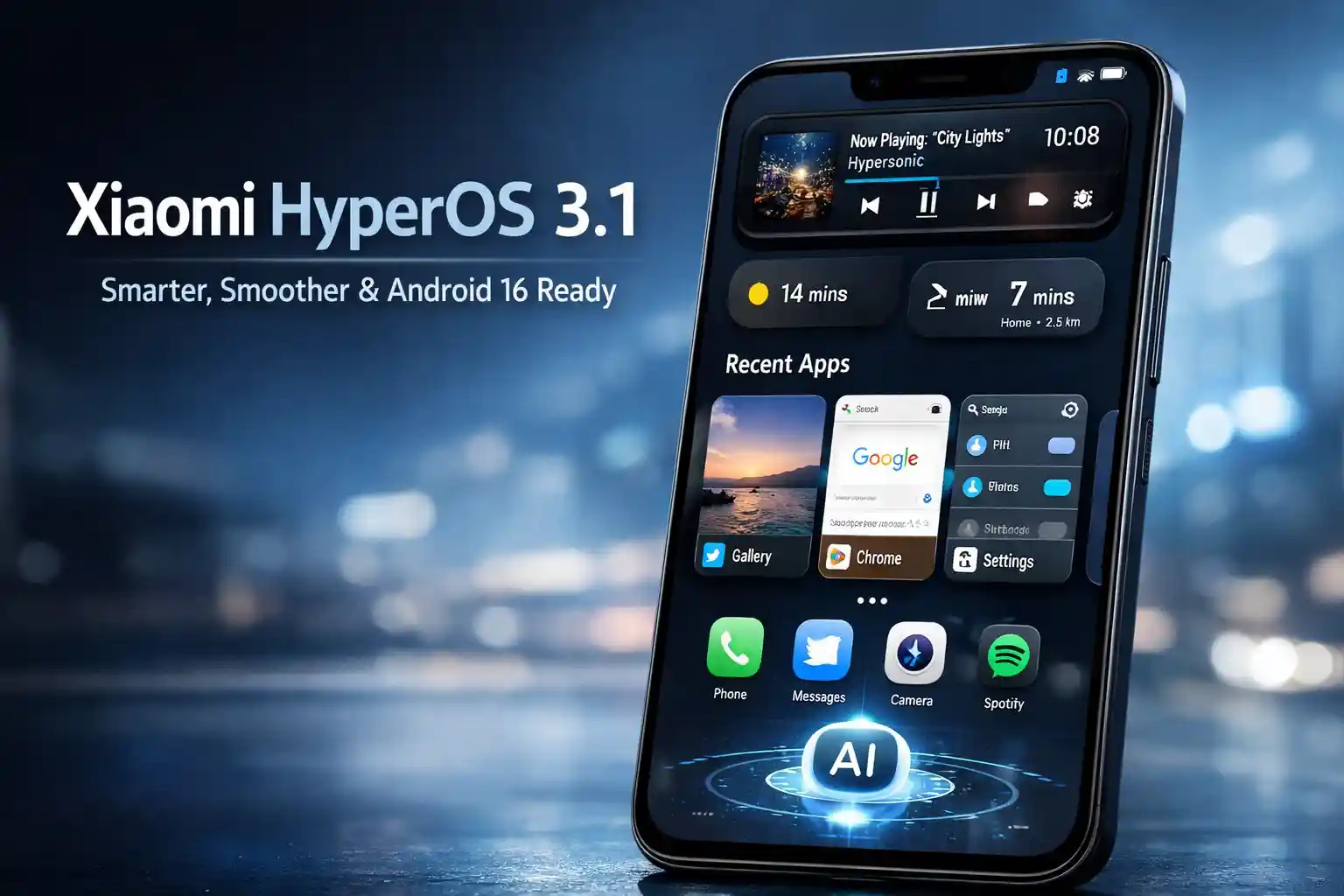
Xiaomi is preparing to roll out HyperOS 3.1, an incremental yet impactful update that builds on HyperOS 3.0 with smarter system behavior, visible UI refinements, and deeper Android 16 integration. While it may not be a complete redesign, HyperOS 3.1 introduces several meaningful upgrades that enhance daily usability—especially on newer Xiaomi, Redmi, and POCO devices.
Smarter HyperIsland Experience
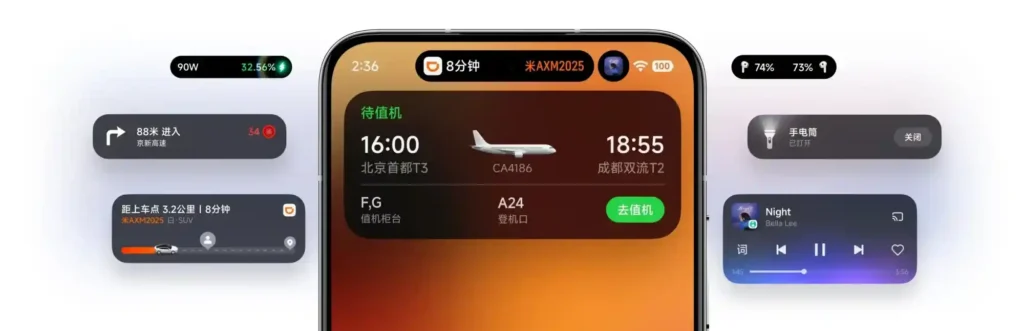
One of the most talked-about additions in HyperOS 3.1 is the upgraded HyperIsland feature. The system now delivers more intelligent, real-time information directly on the screen without forcing users to open apps.
HyperIsland in HyperOS 3.1 supports:
- Live media controls with richer animations
- Real-time status updates for calls, timers, and navigation
- Improved responsiveness and smoother transitions
This makes HyperIsland more practical and closer to a true live-activity hub rather than just a visual element.
New Recent Apps UI and Visual Refinements
HyperOS 3.1 introduces a redesigned Recent Apps menu, moving away from the traditional layout to a stacked, horizontal scrolling style. This change improves one-handed usability and makes multitasking feel faster and more fluid.
Alongside this, Xiaomi has refined:
- System animations
- App opening and closing transitions
- Overall UI smoothness
The result is a cleaner and more polished interface without changing the core HyperOS identity.
Improved Home Screen Customization
Customization sees a noticeable boost in HyperOS 3.1. Users now get more flexibility when organizing their home screen.
Key customization upgrades include:
- Resizable folders in multiple layouts (such as 2×1 and 1×2)
- Better icon alignment and spacing
- Smoother drag-and-drop interactions
These small but practical improvements make the home screen feel more modern and user-friendly.
Performance, AI, and Battery Optimizations
Under the hood, HyperOS 3.1 focuses heavily on efficiency and intelligence, powered by Android 16.
Notable backend improvements include:
- AI-assisted memory and background task management
- Faster app launch speeds
- Reduced battery drain during idle and background usage
- Improved system stability during heavy multitasking
While these changes may not always be visible, they contribute significantly to a smoother long-term experience.
Android 16 Requirement and Device Eligibility
A major shift with HyperOS 3.1 is Xiaomi’s decision to limit the update strictly to Android 16 devices. Phones and tablets still running Android 15 will not receive the HyperOS 3.1 update, even if they are on HyperOS 3.0.
This means:
- Newer flagship and premium mid-range devices are prioritized
- Many older Xiaomi, Redmi, and POCO models will miss out
- Xiaomi aims to reduce fragmentation and maintain consistency
Although disappointing for some users, this approach allows Xiaomi to fully utilize Android 16 features without compromises.
Rollout Timeline and Availability
Early information suggests that HyperOS 3.1 rollout begins with internal testing and limited beta releases, followed by a phased public rollout. Flagship models are expected to receive the update first, with broader availability expanding gradually.
The update is expected to roll out between late 2025 and early 2026, depending on region and device category.
Is HyperOS 3.1 a Big Upgrade?
HyperOS 3.1 is not a radical transformation, but it is a smart refinement update. It focuses on polishing what already works—making the interface smoother, HyperIsland more useful, and system performance more reliable.
For users with Android 16-eligible Xiaomi devices, HyperOS 3.1 promises a faster, cleaner, and more intelligent experience that improves everyday smartphone usage rather than chasing flashy changes.