
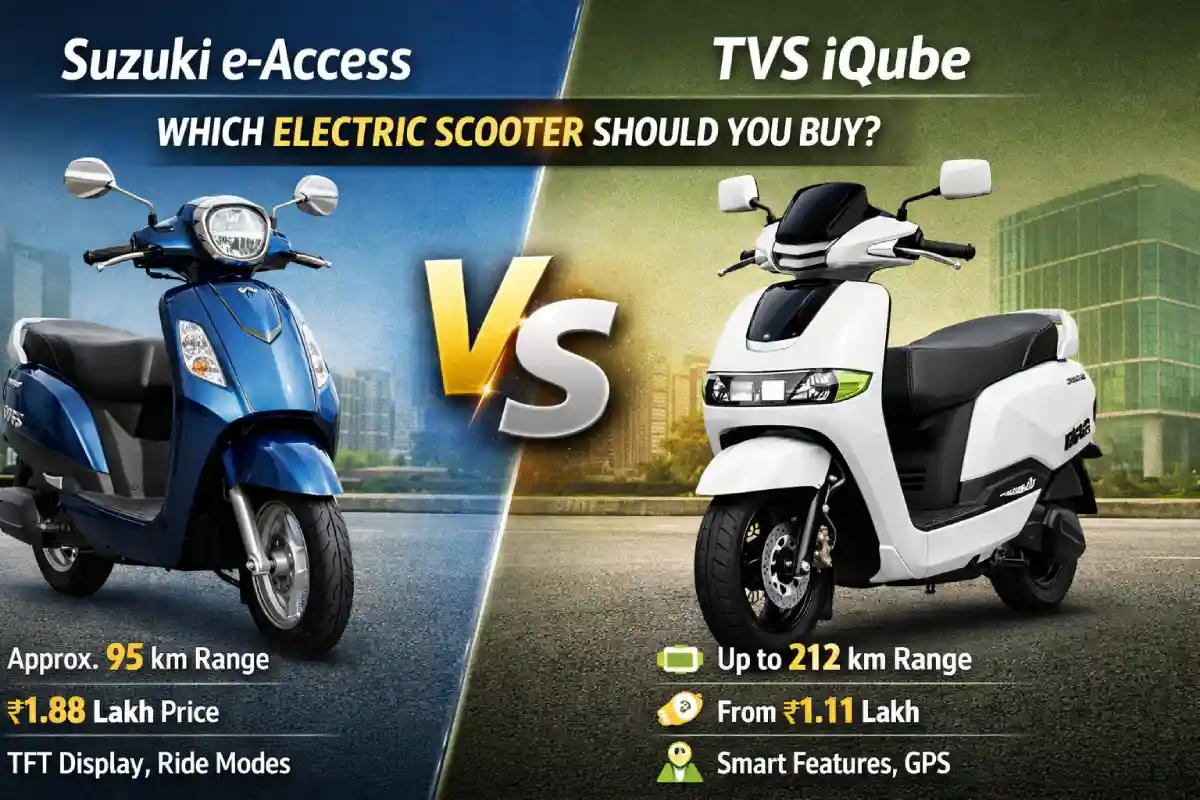
The Indian electric scooter market has just witnessed its biggest clash of 2026. With the launch of the Suzuki e-Access, the legendary reliability of the Access brand is now competing against the segment leader, the TVS iQube. If you are planning to go electric and are confused between the premium trust of Suzuki and the proven performance of TVS, this detailed guide is for you.
1. Design and Aesthetic Appeal
- Suzuki e-Access: Suzuki has stayed true to its roots. The e-Access looks almost identical to its petrol sibling, retaining that classic, sophisticated “family scooter” look. It features clean lines, high-quality plastic panels, and a sturdy build.
- TVS iQube: The iQube offers a more contemporary and futuristic design. With its sleek LED DRL strip and multiple variant options (Base, S, and ST), it appeals to a younger audience looking for a modern-day gadget on wheels.
2. Performance and Battery Tech (Technical Breakdown)
The core difference lies under the seat. While TVS focuses on range and technology, Suzuki has prioritized safety and battery longevity.
Technical Comparison Table:
| Feature | Suzuki e-Access | TVS iQube (Standard/S) |
| Battery Type | LFP (Lithium Iron Phosphate) | NMC (Nickel Manganese Cobalt) |
| Battery Capacity | 3.07 kWh | 3.4 kWh |
| Certified Range | 95 km | 100 – 145 km (Variant dependent) |
| Top Speed | 71 kmph | 78 – 82 kmph |
| Peak Power | 4.1 kW | 4.4 kW |
| Braking | Disc (Front) / Drum (Rear) | Disc (Front) / Drum (Rear) |
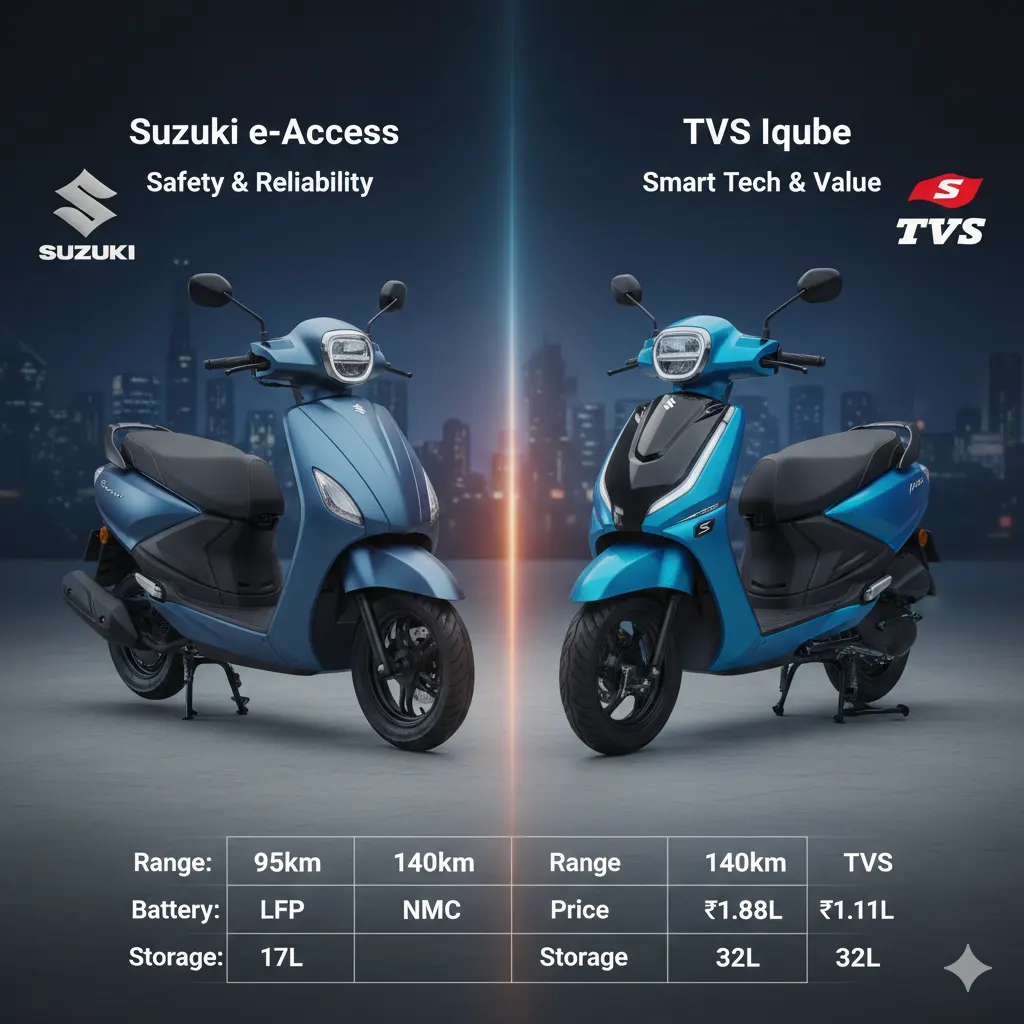
3. Battery Safety: LFP vs. NMC
One of the biggest talking points is the battery chemistry.
- Suzuki e-Access (LFP): Suzuki uses Lithium Iron Phosphate (LFP) cells. LFP batteries are globally recognized for being more thermally stable (safer in extreme Indian summers) and having a significantly longer lifecycle (more charge cycles).
- TVS iQube (NMC): The iQube uses NMC batteries. These are lighter and offer higher energy density, which is why the iQube provides a better range for the same size, but they require more advanced cooling systems to manage heat.
4. Features and Practicality
- Storage Space: This is where TVS takes a massive lead. The TVS iQube offers a generous 32-liter under-seat storage. In contrast, the Suzuki e-Access provides only 17 liters, which is barely enough for a half-face helmet after storing the portable charger.
- Connectivity: Both scooters feature Bluetooth connectivity, turn-by-turn navigation, and call alerts. However, the TVS ‘SmartXonnect’ platform is generally considered more feature-rich, offering geofencing and anti-theft tracking across more variants.
- Reverse Mode: Both scooters come equipped with a reverse assist feature, making it easy to maneuver out of tight parking spots.

5. Price and Value for Money
- Suzuki e-Access: Priced at an introductory ₹1,88,490 (ex-showroom). It is positioned as a premium product. You are paying for the brand’s mechanical engineering and the massive 7-year warranty on its belt drive system.
- TVS iQube: Prices range from approximately ₹1.11 lakh to ₹1.60 lakh (depending on the battery pack and city subsidies). Currently, the iQube offers much better “value for money” in terms of range per rupee spent.
Final Verdict: Which One Is Right For You?
Choose the Suzuki e-Access if: You prioritize safety and long-term durability above all else. Its LFP battery and Suzuki’s legendary build quality make it a “buy it and forget it” machine for families who don’t mind the premium price tag.
Choose the TVS iQube if: You want the best features, more storage space, and a higher range at a lower price point. It remains the more practical choice for daily commuters who carry bags or helmets under the seat.